

Tostones, or twice-fried green plantains, are more than just a snack. They’re a cherished staple in many Latin American and Caribbean households. Known for their crispy exterior and savory, slightly starchy interior, tostones are beloved from Puerto Rico and the Dominican Republic to Cuba, Colombia, and beyond.
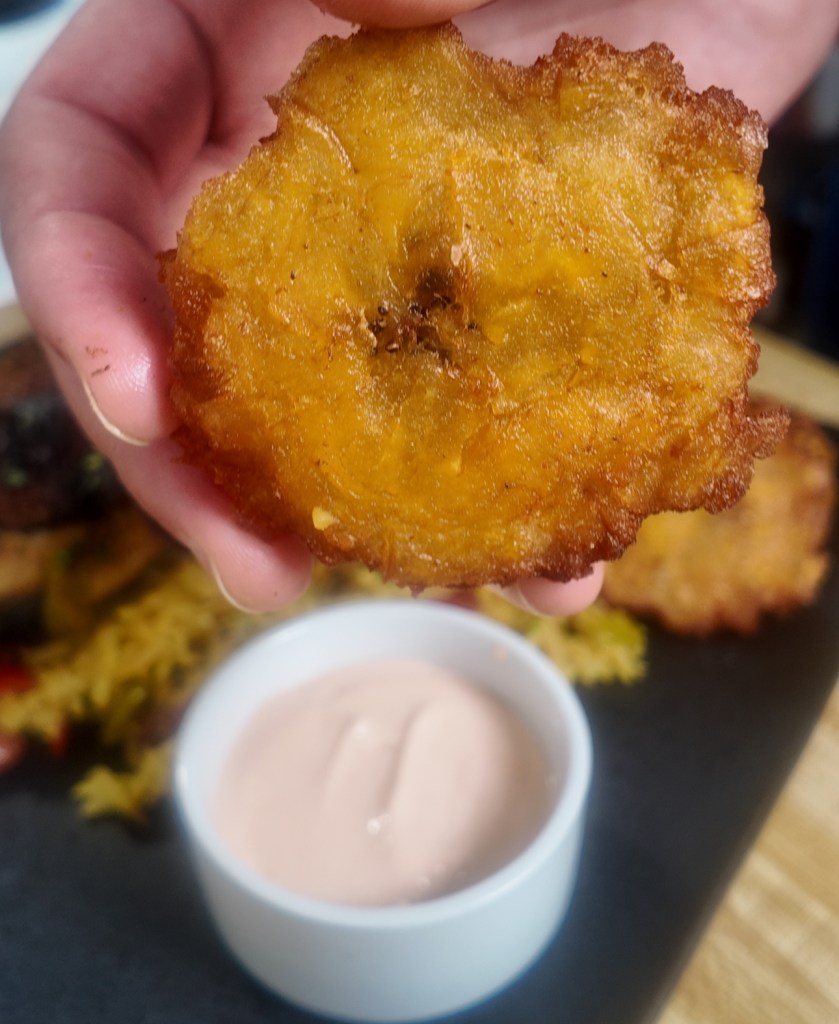
Historically, tostones trace back to African and Indigenous culinary traditions. Fried plantains became a central part of Afro-Caribbean cuisine during the colonial era. Plantains, a close cousin of bananas, were easily grown in tropical climates and became a versatile, nutritious staple in many cultures. Over generations, the method of frying, smashing, and frying again evolved into the crispy perfection we know today as tostones.
Whether served as a snack, side dish, or appetizer, tostones are a perfect canvas for flavor. They are especially tasty when enhanced with garlic and a light sprinkle of salt. In many homes, they are paired with mojo sauce, guacamole, or even enjoyed solo. The crisp crunch is incredibly satisfying.
Tostones are a symbol of shared heritage and culinary pride, offering a taste of tradition in every bite.
Tostones, or twice-fried green plantains, are more than just a snack. They’re a cherished staple in many Latin American and Caribbean households. Try this fool proof recipe and see what the hype is all about!